
In 1993, Wu-Tang Clan released a song titled C.R.E.A.M. (Cash Rules Everything Around Me), highlighting the tragic reality of growing up in a violent low-income neighborhood. A single lyric conveyed a universal message about our youth.
“Life as a shorty shouldn’t be so rough.”
In other words, children shouldn’t have to live in survival mode. Every child deserves to feel safe and have a stable support system that encourages growth.
Hardship extends well beyond America’s under-resourced communities.
According to the World Health Organization, an estimated sixty percent of children worldwide experience some form of physical or psychological abuse by a parent or caregiver before the age of 5. Behind that sobering statistic are young nervous systems learning that the world is a dangerous place.
Yet abuse doesn’t just happen behind closed doors. According to the Centers for Disease Control and Prevention’s 2023 Youth Risk Behavior Survey, thirteen percent of U.S. high school students reported staying home from school over safety concerns at least once in a 30-day period, and sixteen percent were cyberbullied via text messages or social media platforms.
Though these statistics represent extreme examples of harm, ordinary interactions at home can also impact a child’s understanding of what it means to be kind.
How parents shape a child’s inner voice begins long before a child can name their emotions. In a world that can be so unkind, our words and actions are quietly teaching them how to treat themselves and others.
How Parents Shape a Child’s Inner World Through Connection
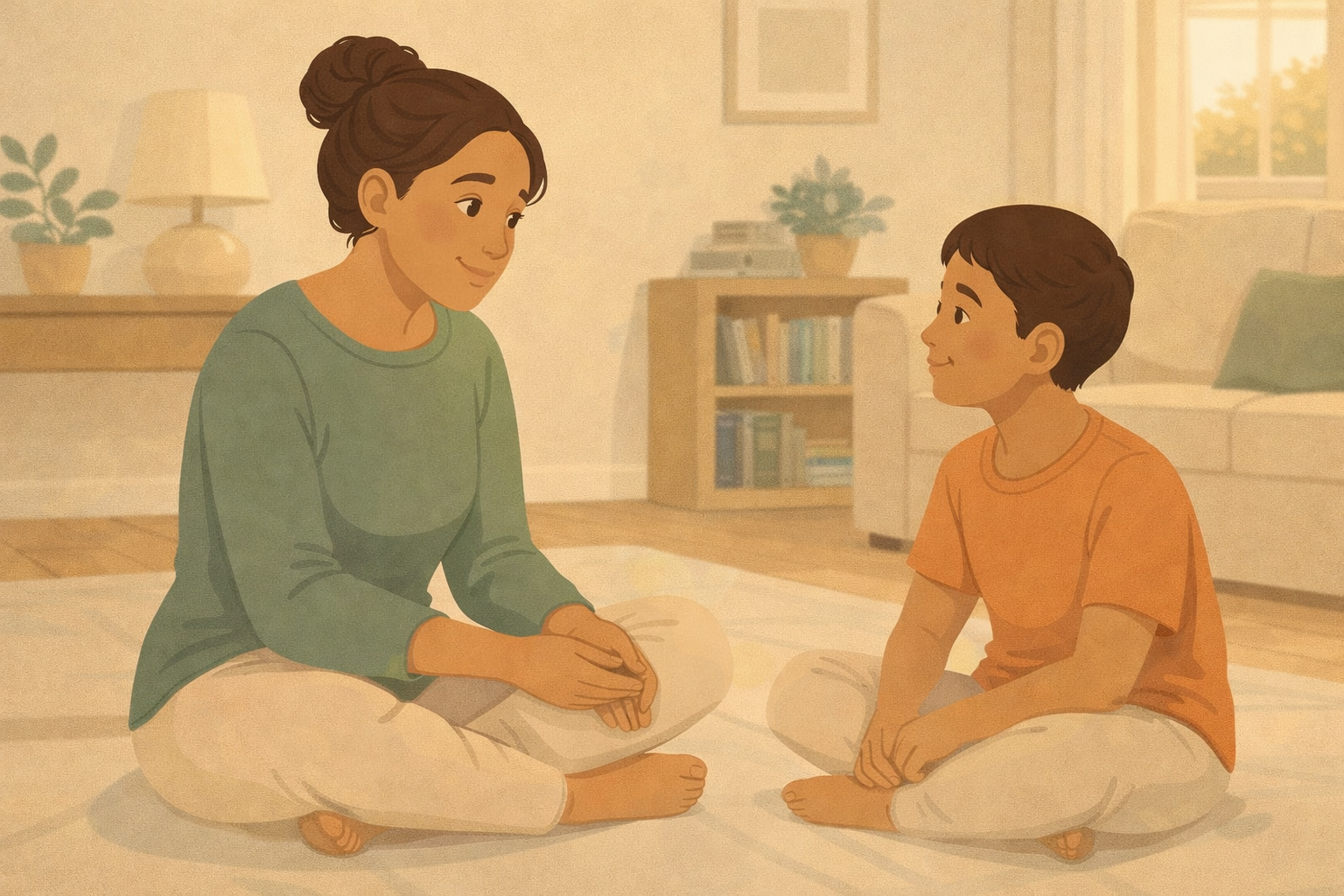
If we want our children to be kind to themselves and empathetic to others, we need to model compassion by taking an active interest in their lives. This teaches them that they matter and shows them how to step outside themselves to consider the needs of others.
Unfortunately, financial pressure, anxiety, and depression can limit our capacity to tune into what’s going on with others—including our own children.
This is why self-kindness matters in parenting. Taking care of our emotional needs gives us the bandwidth to help our children navigate their own emotions.
One way to do this is by checking in with ourselves daily to name our emotions and acknowledge our needs. We can make this practice a moment of connection by inviting our children into the process.
Choose a realistic time in the day to take turns naming emotions and sharing what might be driving them. Ask your children how you can support their current needs and share gentle ways they can support yours—picking up after themselves or treating each other with respect, for example.
Not only will this help you understand what they may be going through, but it also gives you an opportunity to teach them how to tune into their own emotions and communicate their needs and boundaries.

You could also turn physical activity into a moment of connection by going on a walk as a family.
Leave devices at home or silence notifications to minimize distractions. This creates space for meaningful conversation.
Try to let your child direct the conversation. This is an opportunity for you to get a glimpse into their inner world—not hold them captive for a lecture.
Ask questions and encourage them to elaborate on their answers to help you fully understand their thoughts and emotions. Try to avoid rushing to correct them for expressing ideas that may be uninformed or fueled by intense emotions.
Patience and thought-provoking questions might lead them to self-correct. If not, offer guidance in a way that dignifies them—talk to them, not at them.
Children should feel seen and heard. When we show personal interest in our children’s lives, they learn that their inner world matters.
Our example teaches them how to take notice of others and listen with compassion.

How Parents Shape a Child’s Inner Voice Through Everyday Speech
Another way we model kindness is by being mindful of our speech.
Sociocultural theory, developed by Lev Vygotsky, suggests that a child’s social interactions with the adults in their lives play a key role in their cognitive development.
The manner in which parents and other adults communicate with a child affects that child’s developing self-talk. Speech that is consistently critical, demeaning, or dismissive can play a role in the formation of an inner critic.
In contrast, children who grow up in homes with warm and loving parents who listen to them are more likely to develop healthy self-esteem and self-confidence.
A child who hears, “It’s okay. You did your best,” will learn to treat themselves compassionately when confronted with mistakes, while the child who hears, “What is wrong with you?! Are you crazy?!,” will learn to berate themselves or shut down in shame.
It’s unrealistic to expect any parent to be positive with their children one hundred percent of the time. Taking responsibility for unkind words and offering a sincere apology shows them that they are just as worthy of respect as everyone else.
It also shows rather than tells that everyone makes mistakes—even Mom and Dad.
Still, it isn’t just the way we talk to our children that can impact their self-talk. They also listen to how we speak about ourselves. We can unintentionally normalize things like body shaming by picking ourselves apart in front of them.
A scene in Mean Girls depicts this dynamic. Cady Heron, a teenager navigating high school after years of homeschooling, observes the school’s it-girls criticizing parts of their own bodies.
“I used to think there was just fat and skinny. But apparently there’s lots of things that can be wrong on your body,” she narrates.
When the girls look at her in expectation, she searches her brain for a self-critique.
“I have really bad breath in the morning.”
Though light-hearted by comparison, this scene touches on an important truth: self-criticism is learned behavior.
We have the opportunity to model self-kindness by speaking about ourselves with the same respect we hope they will extend to themselves.

How Parents Shape a Child’s Character Through What They Model
Children don’t just listen to what we say—they watch what we do, including how we treat others.
One of the most powerful ways to teach the value of kindness is to model it in our daily interactions.
Ordinary activities—like checking out at the grocery store or eating at a restaurant—become teachable moments when our children are watching.
We should ask ourselves:
What lesson will they learn from my behavior?
When children observe their parents regularly mistreating service workers, they may take away the message that people in certain occupations are inferior.

In contrast, parents who remain calm and polite—even when inconvenienced—demonstrate that everyone is deserving of respect, regardless of their role.
Children also learn from how we interact with people from different backgrounds—race, gender, sexuality, religion, and socio-economic status.
Edgy humor at the expense of certain cultures or genders can unintentionally reinforce xenophobia, homophobia, or sexism. Even if we don’t actually harbor these views, children cannot always tell the difference. We should be mindful of the messages our entertainment choices and commentary send.
In a multicultural society, we will inevitably encounter people with values and beliefs different from our own. Treating them with dignity and respect isn’t a concession. It’s human decency.
We pass this wisdom down to our children by treating everyone with kindness—regardless of their background.

Next Steps for Your Self-Discovery Journey
If you’d like to explore these ideas more personally, these resources may help.
Download your free Kindness Reflection Toolkit, designed to help you explore this month’s theme at your own pace.
Gentle Ways to Apply This:
- Slow down and explore your child’s emotional world through one intentional conversation each day. This free printable, The 7-Day Inner World Check-In, supports emotional awareness and open communication.
- Reflect on how you speak to your child and yourself to understand how your words might be influencing their inner voice. Use this free gentle worksheet, The Words They Hear, to help you build healthier communication habits.
- Reflect on how your everyday interactions shape your child’s understanding of dignity and respect. This free What Am I Modeling? printable helps you examine the tone, reactions, humor, and commentary woven into the atmosphere of your home.
Where Kindness Begins
A child’s sense of kindness begins with the adults in their life. Engaging them in meaningful conversations shows them how to step out of their inner world to notice others. We model self-kindness by discussing our children and ourselves with dignity and respect. The way we treat others and our entertainment choices can shape how a child views people from different walks of life. We don’t need to concede on things that may not align with our personal values, but our words and actions should send the message that everyone is deserving of kindness and compassion.
Thank you for taking the time to read this. If this post resonates with you, please share it with a parent who wants to help their children be kind to themselves and others.
How do you model kindness for your children?
Please feel free to share your thoughts in the comments. If you’d like to receive an email notification when my next post goes live, you can subscribe using the form below.
Keep it kind, respectful, and focused on self-love and growth—let’s make this a safe, uplifting space. 🌿