

After 12 weeks of strength training and loosely tracking only protein intake, it’s time for me to get serious about nutrition.
I went into my 8-week caloric deficit thinking I was more than ready. I’d been working with a registered dietitian for a few months in preparation for a healthy fat loss cycle. We started with small changes like swapping white rice and potatoes with their nutrient-dense counterparts.
“Brown rice?! Whole wheat bread?! This is lame,” my inner child scoffed.
“It’s definitely going to take some getting used to, but we’re going to feel fuller longer and have more energy in the long-run. Let’s just experiment with a few recipes for the next few weeks and see how it goes.”
Less than a week into the swaps, I was hooked.
I felt really good about my food choices. I also had less of an urge to snack throughout the day and didn’t feel as sluggish as I’d been before the changes.
“See! This isn’t so bad. What if we limited sweets to the weekend? Our skin will look better, and dessert will feel even more like a treat,” I coaxed.
“Fine, but you better bake us something good on Friday,” My inner child bargained.
Things were going well until it was time to limit myself to maintenance calories or less. The first half of day one was smooth sailing. I prioritized protein, drank water with every meal, and kept track of everything. Things took a turn in the evening, however.
My husband had asked me to pick some snacks up for him and the kids, and I even had enough room in my caloric budget to get myself a little something.
As I browsed the freezer aisle, my inner child jumped for joy.
“Ben and Jerry’s Topp’d Mint! Please! Please! Please! We’ve been so good all day!”
“That’s true, and I love that for us. But you know we’ll eat the whole pint and undo our progress if we bring this into the house. Let’s try some frozen Greek yogurt instead. They even have a mint flavor.”
I knew it wasn’t going to hit the same as my favorite ice cream, but it was a pretty good compromise.

Satisfied, I made my way to self-checkout.
As I scanned my items, a bright yellow sticker caught my eye.
One of my candy bars of choice was on sale! Muscle memory sent my hand toward the shelf, but I stopped short.
I’d made a promise to my 40-year-old self that we would go into the second half of life with a body that was healthy and ready for adventure. To keep my word, I needed to break free of the habits that were self-sabotaging.
“But we always treat ourselves to a candy bar when we’re out without the kids! Come on! We don’t know when we’ll have this opportunity again!”
Despite my inner child’s protests, I honored my commitment to my future self and walked out the store with my head held high.
I was not only good to my future self by keeping my word. I also held firm boundaries with my inner person without resorting to guilt and shame-based tactics. I stuck to my new habits for the rest of the week and was pleased to report back to my dietician that things had gone really well.
These may seem like surface level decisions, but they’re acts of goodness that are building toward something much bigger than a healthy physique alone.
When we think about being good, it’s often relative to our treatment of others and almost never about how we treat ourselves—but what it means to be good to yourself goes much deeper than we’re taught. What if being good to others depends in large part on how good we are to ourselves?
In today’s post, we’ll explore what it truly means to be good to ourselves and how it can radiate out into the world around us.
Being Good to Yourself Starts From Within
My experience over the course of my current physical wellness journey highlights an important and often overlooked truth about self-goodness. Being good to ourselves means being considerate of both our inner child and our future self.
Psychologist Carl Jung laid the foundation for what is now known as “inner child work” in 1940 with his published work The Psychology of the Child Archetype. He believed the inner child represents the point where the conscious and unconscious mind meet.
It is our childlike past self who holds our earliest emotions, memories, beliefs, hopes, and dreams—both positive and negative.
All of these things influence our current identity and worldview, and our inner child constantly lets us know what they need through our impulses and responses to various situations.
For example, I did not grow up eating the most nutritious foods, so my inner child needed help understanding how our food choices can affect the amount of energy we have and the condition of our skin.
I have a history of extremely restrictive eating patterns and poor body image, so I needed to focus on the benefits that aren’t weight-related.
I try to talk to my inner child about nutrition and exercise the same way I talk to my tween daughters. If handled improperly, this topic can quickly become a source of body shame that fuels severe restrict and binge cycles and low self-worth.
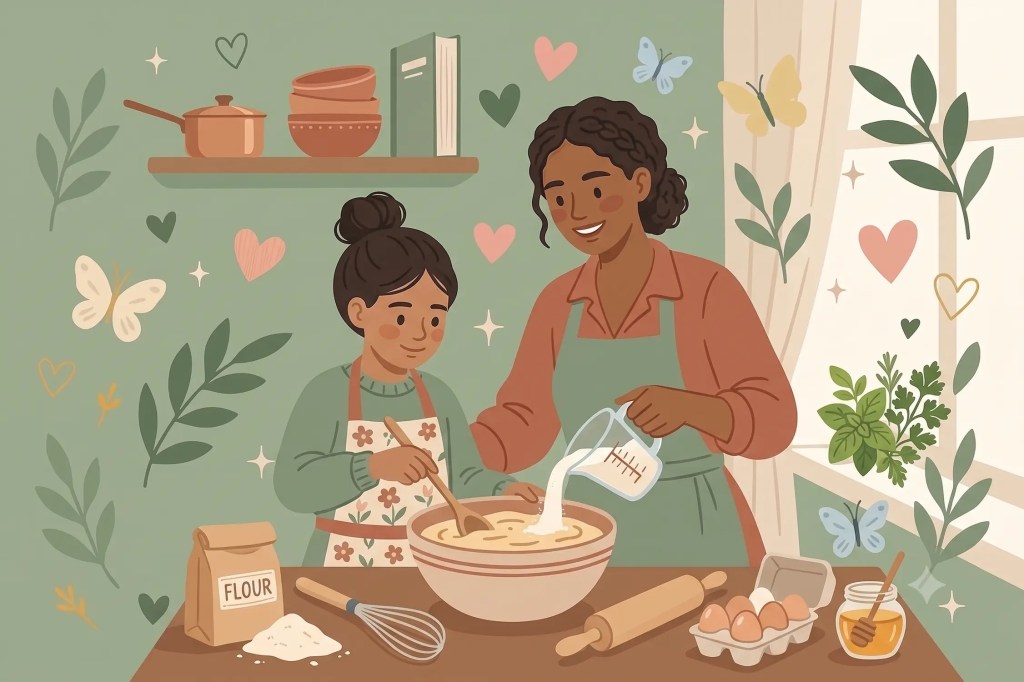
I’m not cutting down excess fat out of body hatred. I’m doing it out of love and appreciation and a desire to have a long, healthy life. I’m doing it for the future self I’ve recently become more aware of.
Like most children, my inner child lives feeling to feeling with little regard for the future, so it’s up to me to teach her about the impact our current choices can have in the long-term.
By setting firm boundaries with dignity and care, I’m reparenting my inner child while also being an advocate for my future self.
Neurological research suggests that we process thoughts about the person we will be later in a way that is similar to how we process thoughts about complete strangers—making us less inclined to make sacrifices for the benefit of our future self.
This is the driving force behind things like procrastination, overspending, and overeating, but cultivating an emotional connection with our future self can be a powerful antidote to these self-destructive habits.
I recently found myself in the kitchen reluctantly dicing vegetables and lamenting over how much of my day is taken up by meal prep. Once I got everything into the oven, though, I looked over at the two massive sweet potatoes left in my bin and said to myself, “Future Bryanna would really appreciate not having to cut those. Plus if you freeze them, they’re less likely to go to waste.”
Taking a few moments to think about my future self motivated me to give her the gift of not having to stand at the counter peeling and dicing vegetables when she could be doing other things—like catching up on the blog posts I got her behind on by procrastinating.
My inner child even appreciated the reframe and was happy to do something kind for the woman who would be taking care of her in the future.

Are You Being Good to Yourself or Just Good to Everyone Else?
Being considerate of our future self can sometimes feel more challenging than being considerate of others. We have control over how we think and feel about our imperfections and failures, but we have little to no control over someone else’s interpretation of our behavior.
For this reason, it often feels safer to disappoint ourselves than to face someone else’s disappointment, but our future self can only be ignored for so long before we’re forced to confront them—often in ways that are unpleasant.
Imagine you’re a model employee in a high pressure work environment. You’re the first person in the parking lot every morning and one of the last people to leave the office at the end of each day. You can’t remember the last time you took a vacation, called in sick, or left early for an appointment. Your boss can always count on you to give 110% on every task thrown your way and without complaint.
Your performance reviews are spectacular. You’re on-track for a promotion and a raise, but what will overachievement cost your future self in the long run?
Every time you stay late to satisfy the demands of your job, you borrow the mental and emotional bandwidth needed for your personal life from your future self.
When you get home, your impulse might be to snap at your family members, order comfort food that isn’t very nutritious, doomscroll, or sit in front of the tv until bedtime.
Your future self is left with guilt and shame for mistreating the people you care about most—along with a mountain of tasks that didn’t get done because you were too tired.
Your body is also running on foods that aren’t very supportive of your overall health and very little rest—and what about those appointments you’ve been putting off for the sake of perfect attendance?
Not following up with your doctor or dentist narrows the window of preventative care that could help you avoid a serious health issue down the line. Not only will your future self pay the price, your loved ones and anyone else who depends on you will suffer as well.
It raises the question: are all of these things hallmarks of a strong work ethic or self-erasure?
There’s real harm in showing up for others without considering the needs of your future self first. It’s not only acceptable to say no to the things you don’t have the capacity for—it’s protective.
If you’re a people-pleaser like me, then you know that’s easier said than done.

Saying yes to others is an impulse driven by our inner child’s mistaken belief that the only way to avoid conflict and feel secure in relationships is to prioritize other people’s comfort. This is called a fawn response, and it’s an adaptive strategy often learned in situations where a caregiver or authority figure has a pattern of frightening or unpredictable behavior.
Our inner child needs reassurance that we aren’t doing anything wrong by advocating for ourselves. Even if setting a boundary creates discomfort for the other party, it doesn’t mean the relationship is doomed.
Practicing boundary setting and enforcement teaches our inner child an important truth that may have been miscommunicated during our upbringing. People who are good for us want what’s best for us. That means sticking by us even when they don’t understand or are inconvenienced by the boundaries we set for our own wellbeing. It takes time and patience for our inner child to truly understand this, though.
When we start setting boundaries with people, they might react with discomfort, guilt, or fear.
Self-soothing techniques like grounding statements and mindful breathing can help our inner child cope as we wait for our nervous system to stop associating authenticity with danger. We can also reframe boundaries as acts of kindness for our future self.
“I know you’re afraid of disappointing our boss and coworkers, but our future self would really appreciate some rest after working so hard. We can always volunteer to do more when we feel more energized.”

What Self-Neglect Really Costs You and the People You Love
We can’t truly do good for others if we aren’t virtuous toward ourselves first. It takes courage, self-kindness, wisdom, and honesty to stand up for our future self and reparent our inner child with love and compassion.
If we never overcome our fear of disappointing others, we run the risk of overextending ourselves and burning out to the point of becoming completely unreliable.
In the Joy series, I shared how overcommitting to tutoring gigs sent my life into disarray and culminated in a mental health crisis that sent me to in-patient treatment.
I’d been so focused on showing up for my students that I stopped prioritizing sleep, self-care, quality time with my family, and my home. Over time, the stress did start to impact my performance.
I was so tired I would miss early morning sessions because I overslept. I got sick more frequently and had to cancel lessons at the last minute. Worse, I started to lose the enthusiasm for teaching that had attracted my students to me in the first place.
The guilt for failing as a wife, mother, and teacher created a negative feedback loop that eventually sent me into a deep depression. Right before my hospital stay, I would often find myself getting out of bed long enough to feed my kids then heading straight to the couch to burrow myself in a blanket and cry quietly.
My self-talk was toxic. Instead of asking myself what I needed, I berated myself for being lazy and useless until I’d sent myself down a very dark line of reasoning.
The reality was that no one could rely on me in that state—not even my husband and children.
My future self was paying the price for my overcommitment, but my unkind self-talk was putting my inner child in distress and causing her to shut down completely.
I would never speak to my children the way I was speaking to myself. I was in need of compassion—not vitriol.
A key insight that came from my time in residential treatment was that gentle self-direction motivates better than guilt and shame. I’ve gotten overwhelmed numerous times since my mental health crisis, but it’s been much easier to pick myself back up now that I’m being more mindful of my inner child.

A musical reminder to be compassionate with your inner child:
I could sum up self-kindness with the oxygen mask analogy, but you would probably roll your eyes from hearing it so many times.
We know we need to take care of ourselves in order to take care of others. Still, knowing the importance of treating ourselves well and actually practicing it are two different things.
This is where the virtue of wisdom comes in. Being wise means actually applying the things we know to be good for us.
It took me about two years after my hospital stay to actually start practicing things like mindfulness and positive self-talk with real consistency, and I can say with no hesitation that I feel more connected to my inner child and future than ever.
I’m able to be honest with myself about the things I struggle with and adjust my lifestyle accordingly—choosing a pint of frozen yogurt instead of Ben and Jerry’s for example.
I’m now making decisions that increase my capacity to show up for my family and friends in a way that’s refreshing to them because I have less anxiety and simmering rage.
In fact, the other day my 11-year-old told me, “I like that you’re taking care of yourself because you seem so much happier. When you’re happy, I feel happy too.”
The goodness we show to ourselves radiates outward. The next time you feel inclined to put your needs last, stop and ask yourself: what will self-neglect cost me and everyone else if it sends me into a crisis?

Put It Into Practice
If you’d like to join me in making goodness a daily practice this month, here are some resources to help you get started.
Subscribe to receive your free Goodness Readiness Toolkit, designed to help you explore this month’s theme at your own pace.
- Introduce your inner child to your future self with this free guided writing exercise, Dear Younger Me, Meet Future Me. Through three guided parts, you’ll visualize the person you are becoming, give your inner child space to speak honestly, and respond with compassion as your present self.
- Use grounding techniques to reassure your inner child when setting and holding a boundary feels intimidating. This free Steady Ground bookmark and wallet-sized reference card includes prompts, reframes, and a grounding script to help your inner child cope with any discomfort they might experience during a difficult boundary conversation.
- Take an honest look at where self-neglect is quietly accumulating, explore what it’s costing your inner child and future self, and identify one small act of self-goodness you can offer this week. This free journaling worksheet, What Am I Borrowing From Tomorrow?, gives you the space to audit the areas of your life that may need more attention with self-compassion instead of guilt and shame.
What Being Good to Yourself Really Makes Possible
Being good to ourselves and living in alignment with our values means learning to cooperate with our inner child and treating our future self with care and compassion. Instead of resorting to guilt and shame tactics for motivation, we can lead with love by explaining to our inner child how good our future self will feel if our present actions give them comfort and peace instead of leaving them feeling overwhelmed.
At times, doing good toward our future self means enforcing boundaries with others, so we may need to teach our inner child healthy ways of coping with fear and discomfort.
Being attentive to our needs and doing acts of self-goodness will give our inner child a sense of safety and allow our future self to thrive.
Do you have a relationship with your inner child and future self?
Please feel free to share your thoughts in the comments. If you’d like to receive an email notification when the next post goes live, you can subscribe using the form below. In the next post, we’ll explore ways to model genuine goodness for our children.
If you’d like a more immersive experience, feel free to join me on YouTube for an unfiltered look at how I’m putting each month’s theme into practice in my own life—the wins, the missteps, and everything in between.
Keep it kind, respectful, and focused on self-love and growth—let’s make this a safe, uplifting space. 🌿